Tuesday, June 9, 2020


When He is She and She is He
or
Gender Equality for Nouns


Es ist klar wie Kloßbrühe!
It’s crystal clear!


 The original saying: It's clear as dumpling broth has been updated to something we can all relate to - water!


Inanimate objects can’t care if they’ve been labeled male, female, or neuter, but once you’ve created a living being, it matters. I still find the reference to a young girl as an it  (das) troubling, but there’s nothing I can do about it. Once that young girl reaches Fraulein status, however, and on into Frauhood, she’s securely labeled as feminine.

That leads us to the next item of gender – professions. 
A male doctor is der Arzt; a female doctor is die Ärztzin.
A male teacher is der Lehrer; a female teacher is die Lehrerin.

A pattern has developed. Most of the time the feminine form is created by adding in to the base word. Sometimes, the first letter gets an umlaut.
In a few cases, the feminine is formed differently:
der Angestellte (employee); die Angestellte
der Krankenpfleger (nurse); die Krankenschwester
der Vorgesetzer (superior); die Vorgesetzte
der Friseur (hairdresser); die Friseuse

Same thing goes for animals. If your German Shepherd’s name is Ingrid, you refer to her as die Hündin. Der Kater solves the die Katze problem for Tiger. The rest of the animal kingdom seems to have sorted itself out with appropriate nouns and genders for each sex within the group:

das Pferd
der Hengst (stallion), die Stute (mare), und der Wallach (gelding).

I’ll never think of Eli the same way again!

The young of each species all have their own words. Later on, I’ll work on the animal kingdom category of vocabulary words. Genug!


Sätze für heute

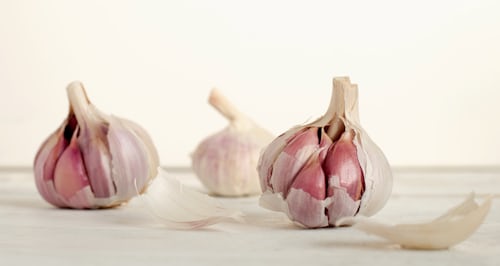
Wurzel is the German word for root.  Der Ingwurzel und der Yamswurzel sind Wurzelgemüse. Der Knoblauch, die Kartoffeln, die Schalotte, die Süßkartoffel, der Rettich, und der Meerrettich sind auch die Wurzelgemüse.

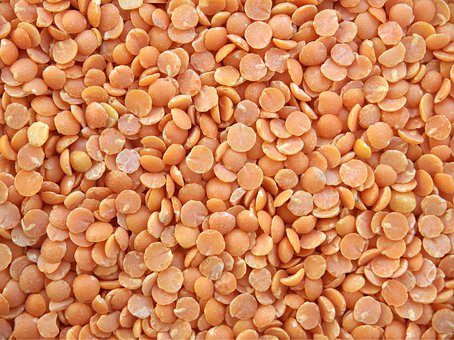
Der Gemüsesamen ist das deutsche Wort für seed. Linsen sind Gemüsesamen.

Die Aubergine ist Gemüse oder Obst!

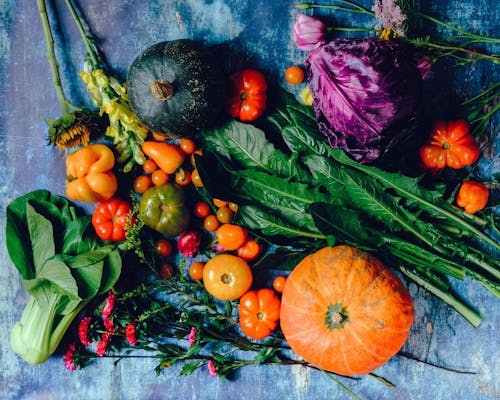
Der Lauch ist grün aber der Mangold ist grün mit gelbe, rote, oder grüne Stiele. Der Rhabarber ist grün mit roten Stielen.

Zucchini und Gurken sind beide grün.

Und das ist alles!!

Monday, June 8, 2020

Die Gemüse Part 3


I’ve rounded up the final 15 veggies. The list will be a little longer today, but again, many are similar enough to English to make learning them not too tough.

die Aubergine (n)

der Meerrettich

der Irgwurzel
der Knoblauch

der Pilz (e)
der Lauch (e)

 der Mangold

die Avocado (s)

der Rettich (e) oder das Radiesche (n)

die Schalotte (n)
die Süßkartoffel (n)
die Yamswurzel (n)
die Zucchini

die Linse (n)


die Gurke (n)


 der bok choi


Und das ist alles!!!

Saturday, June 6, 2020


Der dümmste Bauer erntet die größten Kartoffeln


The dumbest farmer harvests the biggest potatoes.
(translation: JUST DO IT!


Interesting how one thing leads to another. Example. Yesterday I worked on my first vocabulary list and, for the vegetables that had a plural form, I added the ending in parentheses after the word (Got this from the dictionary). I’ve never really understood how to do the plural form of nouns. It seems as if there’s a million different rules to follow. So, today I’ve decided once and for all to get to the bottom of how to pluralize a German noun. It isn’t quite a bottomless pit, but it’s darn close.

After an online search of a bunch of different sites, I’ve narrowed down the different plural endings to 5. I may have missed something, but it appears that these rules cover just about everything. So, here goes.

1. I’m calling this the “Vegetable Rule of Noun Plurals”.

Looking at yesterday’s list, I found that Bohne, Gemüse, Karotte und Beete form their plural by adding an n.  Is this true for all nouns ending in e??? The answer seems to be “pretty much”.

Most of these nouns are feminine. Check. My veggies are all feminine. So, I guess I can be pretty safe following my Vegetable Rule when I encounter a noun ending in e. I’ll test this out as I go along. 

2. Rule #2: The extension of V.R. #1 involves nouns that already end in en. You leave them alone. They have the same form for singular and plural. This also applies to nouns ending in el or en.

One example of this is a word I used in my first post: Madchen:
das Madchen (singular);
die Mädchen (plural).

This rule also applies to nouns that end in er. An example is das Kloster. It becomes die Klöster - convent or monastery. (I just randomly opened my dictionary and looked for the first noun that ended in er.  There is a slight change in the plural, however, of these two words, and it involves the addition of an umlaut. More on this Saturday. I’m really liking how this grammar trek is unfolding. Like consecutive bus stops on a main route, or something. 

3. Adding er. This one seems a bit trickier.

Examples include:

der Mann (singular); die Männer (plural) –  mit umlaut


das Buch (singular); die Bücher (plural) - mit umlaut
das Kind (singular); die Kinder (plural) – ohne umlaut

My online research tells me that most of the words that follow this rule are neuter; a few are masculine (that would explain Der Mann). So far all I can see is that each of these words ends in a consonant.

Also, on a side note, why doesn’t the word umlaut have an umlaut? 

4. Adding an e. Most of these are masculine:

Der Stern (singular); die Sterne (plural)


Der Hund (singular); die Hunde (plural)
These also end in a consonant. Need to follow up on this.


ABER


Die Gans (singular); die Gänse (plural) - hmmm. I see an umlaut again.
Das Pferd (singular); die Pferde (plural) – no umlaut.

Still ending in a consonant.

5. Adding an s. Most of these are foreign words that have been adopted by German or abbreviations.

Das Radio (singular); die Radios (plural)
Die CD (singular); die CDs (plural)

I guess if you’re feeling lucky, you can play the percentages. More online research led me to a site called germanwithlaura.com. She has a good overview and a little chart –

The 80% Rule

80% of masculine and 75 % of neuter nouns add e  
90% of feminine nouns add en

Well, that’s a start. I’m going to need to review this for sure.


WRITING


Here are my 10 Vegetable sentences. They follow the basic rule of German sentence order: 

In a main clause, the verb is ALWAYS the second word in the sentence. Subject goes first. 


Mein Gemüsegarten ist in der Nähe der Scheune. (compound noun)

Die Hasen fressen meinen Mais. (Die Leute essen; die Tiere fressen)

Die Tassenratte fressen meine grünen Bohnen.

Gestern habe ich etwas Spinat geerntet.

Die roten Beeten befinden sich rechts von den Karotten.

Mein Mann hasst Brokkoli.

Der Blumenkohl und der Kohl gehören zur selben Familie.

Die Paprika sind grün und rot.

OK. I cheated a bit, but I think I’m going to allow combining vocab words in my sentences. So, the new rule is to use them all, either independently or in a paragraph. I’m not 100% sure they are grammatically correct, but I’m going to leave them for now. As I learn more I will come back and check on them. Now, to read them aloud and I’m done! 

Bis bald!



Friday, June 5, 2020


Mehr Gemüse


Continuing with the Veggie Vocab today! 


I’m looking out at the garden from my office window, and I can see that die Kartoffeln  are looking great. Potatoes grow really well here – as well as they did in Idaho. Also, the rabbit isn't munching away on my sprouts.

So, here are the words for today:

Die Kartoffel (n)


Die Zweibel (n)


Der Spargel

Die Artischoche


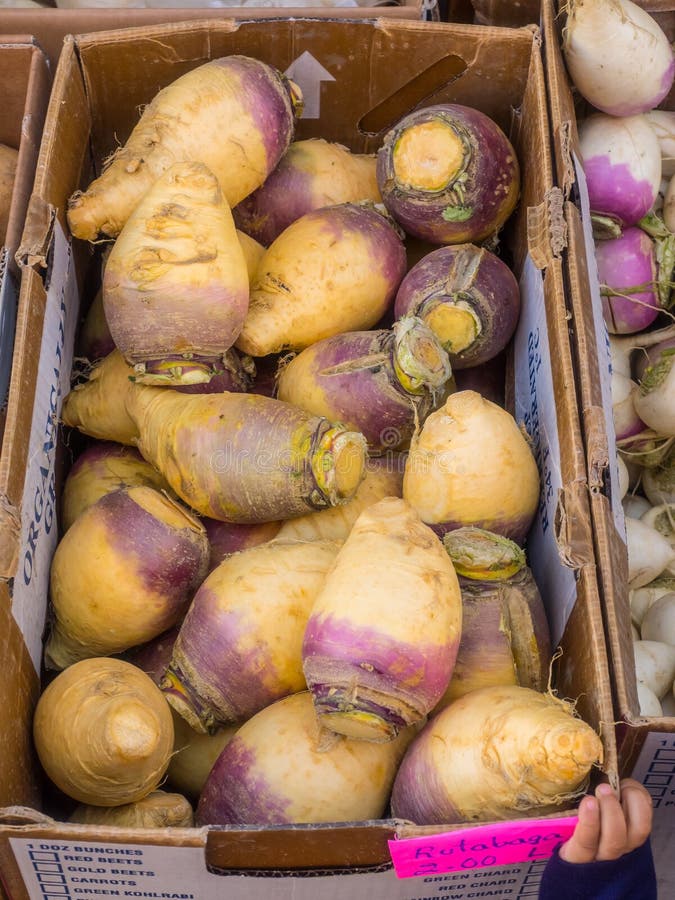
Die Rutabaga

Die Kohlrabi


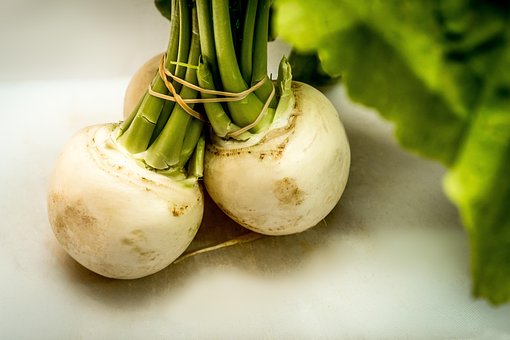
Die Rübe


Der Sellerie


Der Rosenkohl


Auch der Kurbis

Der Kurbis


Just scanning the list, it seems as if a few German words for veggies have been carried right over into English. Neat! Mrs. Rutabaga and  Mr. Kohlrabi stay the same, und der Sellerie und die Artischoche are close enough to celery and artichoke to not be troublesome.  That just leaves 6 to study, and I already knew die Kartoffel. Easy days are fun!


It appears you can’t learn German veggies without a deep appreciation of cabbage. How many of these suckers incorporate kohl  into their names? The list is legion!

I do have a bone to pick with the Germans, however. Whoever decided that Brussels sprouts was a “rose cabbage” was nuts. This is the most disgusting veggie I have ever encountered.

It fools you into thinking it’s a harmless, friendly cabbage. It isn’t. It’s just plain nasty, however you try to disguise it. Sort of like tofu.

I’m feeling adventurous today, so I think I’ll try to decipher a sentence or two on Die Welt, my online German newspaper and then listen to another song from my Schlagerpiloten CD.

Bis Bald!

Thursday, June 4, 2020


Nur die Harten kommen in den Garten

Only the Strong Survive


What’s in an Umlaut? ( ¨ )
An Umlaut by any other Name would still be Confusing


Another dreary Tag hier. Die Sonne scheint nicht. Vielleicht der Regen später kommt. That was fun! I’ve actually seen stuff written like that – some German and some English all mixed together. Heute I’m going to investigate the mysterious and powerful umlaut.

When I’m done, I’m going to do some more research on how to type it without resorting to copy and paste. I know there’s something I can do with the keyboard. I’ve already got the computer set up to proofread in German, but there are more tricks to learn.

So, what do I want to know about this curious mark?
  • ·       What is it?
  • ·       When do I use it?
  • ·       Where does it go?
  • ·       What’s its purpose?
  • ·       How does it change a word’s pronunciation?
  • ·       How do I type it?

·       And, as mentioned in an earlier post, why doesn’t an umlaut have an umlaut?


My first stop was Langenscheidt’s Pocket Dictionary. No listing for umlaut in either the German or English sections. Hmmm.  OK. Time to Google.

Success! Sort of. It seems that the noun form defines a mark used over a vowel to indicate a different vowel quality, usually fronting or rounding. Huh?

As a verb (To umlaut ?????) it means to modify a form or sound by using an umlaut. And it can be conjugated. Good Grief! ( ¨ )

Interesting bit of trivia: The word’s origin dates from the 19th century and is a combination of um (about) and Laut (sound). 


I stared at the Wikipedia article until my eyes glazed over. It might as well have been written in Urdu. Basically, when two vowels come together, they quarrel. Instead of divorcing and kicking one out, they go to arbitration and meld into a new sound that takes qualities from both. It all boils down to a change in pronunciation for the vowels, a,o, und u. You will run across it in noun plurals and in conjugation of verbs.

I did listen to a couple of YouTube videos and got the pronunciation sort of figured out. As for when to use an umlaut, you’ve just got to memorize it when you encounter its use in a noun or verb. No shortcuts here.

Good video to hear pronunciation is German Umlauts for Dummies

Now, as for the typing of said umlauts.


Wow!! That was a piece of cake! Here’s how:
Hold down “control” and “shift” and press “:” (colon). Nothing will appear on the screen, but release all three keys and then type the letter that needs the umlaut. It’s magic!!! 
Ö, ö, Ü, ü, Ä, ä

There are also many YouTube videos that give other methods.  That’s the story on umlauts, and it leads to the next symbol or combination of letters used in German:
ß ß ß ß
More in the next grammar post.

Here are my sentences!

Heute, habe ich den Mais und die Aubergine geentet.

Morgen früh esse ich die Karotten.

Ich mag den Spargel aber hasse ich die Zweibeln.

Mein Sohn mag den Kohlrabi nicht.

Wir haben keinen Artischocken.

Mit den Ingwurzel und Pilzen kann ich die Abendessen machen.

Magst du den Meerrettich?

Der Blumenkohl geht gut mit Käse.

Die Linsensuppe ist lecker.

Ich brauche drei Avocados.


 bis bald!


When He is She and She is He or Gender Equality for Nouns Es ist klar wie Kloßbrühe! It’s crystal clear!  The original ...